 blog
blog
Compact Charging Solutions for Travel: 2026 Guide
Table of Contents
- What to Look for in Compact Charging Solutions for Travel
- GaN Charger Benefits for Travelers
- TSA Compliance and Airline Regulations
- Best Multi-Port Wall Charger for Travel
- How to Organize Charging Cables for Travel
- Wireless Charging Stations: Reducing Cable Clutter
- Conclusion
Last Updated: August 25, 2026
What to Look for in Compact Charging Solutions for Travel
When you're packing for a trip, compact charging solutions for travel become non-negotiable. You need devices that work across multiple phones, tablets, and wearables without turning your carry-on into a cable management nightmare. The best options balance wattage output, port count, weight, and durability into a footprint that actually fits in your pocket.
Here's what actually matters when evaluating compact charging solutions for travel.
Wattage Output and Power Delivery
The wattage output determines how fast your devices charge and how many you can charge simultaneously. Most travelers need 65-100W of total output to handle laptops, tablets, and phones at the same time (usb.org). Anything below 45W will struggle with modern devices, especially when charging multiple items.
Power delivery protocols matter more than raw wattage. USB Power Delivery (USB-PD) is the standard that lets chargers communicate with your devices about how much power to deliver. A 65W charger with proper USB-PD implementation will charge a laptop faster and more efficiently than a 100W charger without it. Look for chargers that support multiple power delivery profiles, this ensures compatibility across your entire device ecosystem.
The efficiency rating also affects real-world performance. A charger rated at 90% efficiency means less heat generation, which matters in tight travel bags. Chargers that run hot degrade faster and can trigger thermal throttling on your devices, slowing charge speeds.
Port Count and Device Compatibility
Two ports is the bare minimum for modern travelers. Three ports lets you charge your phone, tablet, and smartwatch simultaneously. Four or more ports adds flexibility but increases size and weight, you're chasing diminishing returns beyond three ports unless you're traveling with a full tech team.
Port type matters as much as quantity. USB-C has become the universal standard, but many devices still use USB-A. A mix of both gives you flexibility without carrying adapters. Some chargers include two USB-C ports and one USB-A, which covers most scenarios. If you're committed to USB-C across all devices, a charger with multiple USB-C ports eliminates the need for adapters entirely.
Quick-charge protocols vary by manufacturer. Samsung devices use different protocols than Apple devices. Universal chargers with broad protocol support (Qualcomm Quick Charge, Power Delivery, and proprietary fast-charge standards) ensure you're not leaving speed on the table regardless of what you're charging.
Weight-to-Wattage Ratio
This is where compact charging solutions for travel prove their worth. A 65W charger should weigh under 5 ounces. Anything heavier suggests inefficient design or unnecessary bulk. The best travel chargers use gallium nitride (GaN) technology, which allows smaller form factors without sacrificing power output.
Compare the weight against the wattage: divide the wattage by the weight in ounces. A ratio above 10 indicates efficient design. Most premium travel chargers hit 12-15. This metric separates genuinely portable chargers from oversized alternatives that claim to be travel-friendly.
Foldable plug designs save space without adding weight. A charger with collapsible prongs takes up about 30% less space in your bag. This small feature makes a noticeable difference when you're packing tight.
GaN Charger Benefits for Travelers
Gallium nitride technology fundamentally changed what's possible in compact charging. Traditional silicon-based chargers generate more heat and require larger heatsinks, making them bulky. GaN chargers run cooler and smaller while delivering the same power.
The efficiency gains are real. A GaN charger converts 90-95% of input power to usable output. Older chargers manage 75-85%. This means faster charging times and less wasted energy, your devices reach full charge quicker, and you're not paying for electricity that becomes heat.
GaN chargers also handle thermal management better during extended use. If you're charging multiple devices for hours during a layover, a GaN charger maintains consistent output without throttling. The internal circuitry adjusts power distribution automatically, sending more wattage to devices that need it while protecting slower devices from overvoltage.
The downside is cost. GaN chargers typically cost 20-40% more than conventional chargers. For frequent travelers, the faster charging times and compact size justify the premium. For occasional travelers, a conventional multi-port charger works fine.
TSA Compliance and Airline Regulations
This is where most travel guides miss a critical detail. Your charger itself is TSA-compliant, power adapters and wall chargers go in your carry-on without restriction. The regulation that matters is lithium battery content.
Chargers don't contain lithium batteries, so they're cleared for both checked and carry-on luggage. Portable power banks with lithium cells have stricter rules: you can bring one per person in carry-on luggage, but they're prohibited in checked baggage. This distinction matters if you're planning to pack a power bank alongside your wall charger.
Check your airline's specific policy before traveling. While TSA sets federal guidelines, individual airlines sometimes impose additional restrictions. Most major carriers follow TSA rules, but budget airlines occasionally have stricter policies. A quick call to your airline's baggage department takes 5 minutes and prevents problems at the gate.
The physical size of your charger doesn't trigger any TSA concerns. A compact charger that fits in your pocket is just as compliant as a full-size model. TSA agents care about what's inside (lithium cells, batteries), not the external dimensions.
Best Multi-Port Wall Charger for Travel
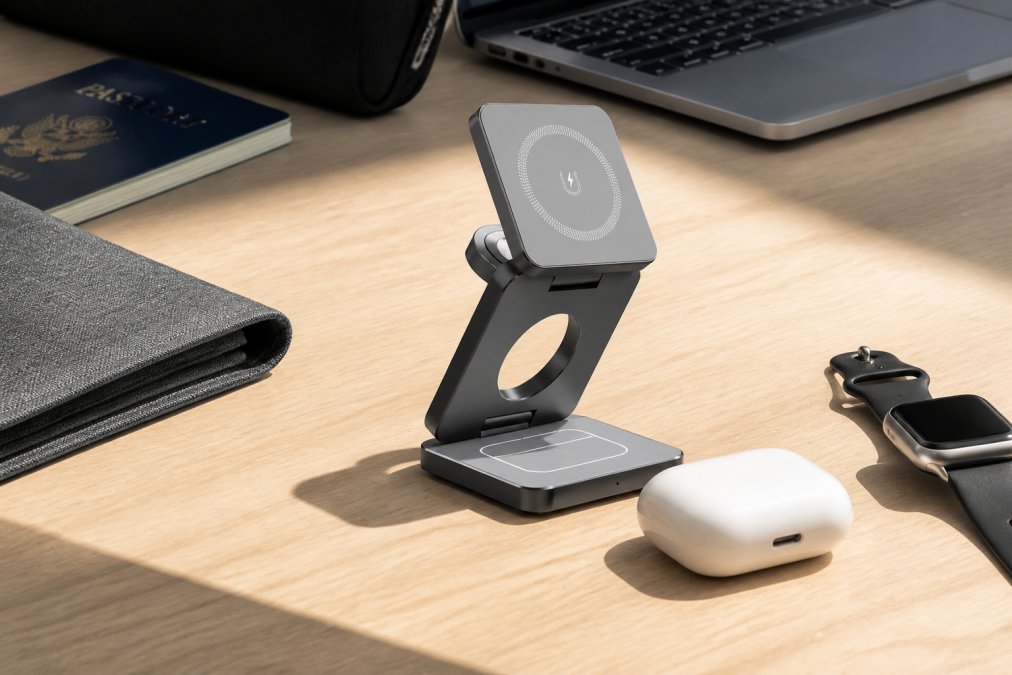
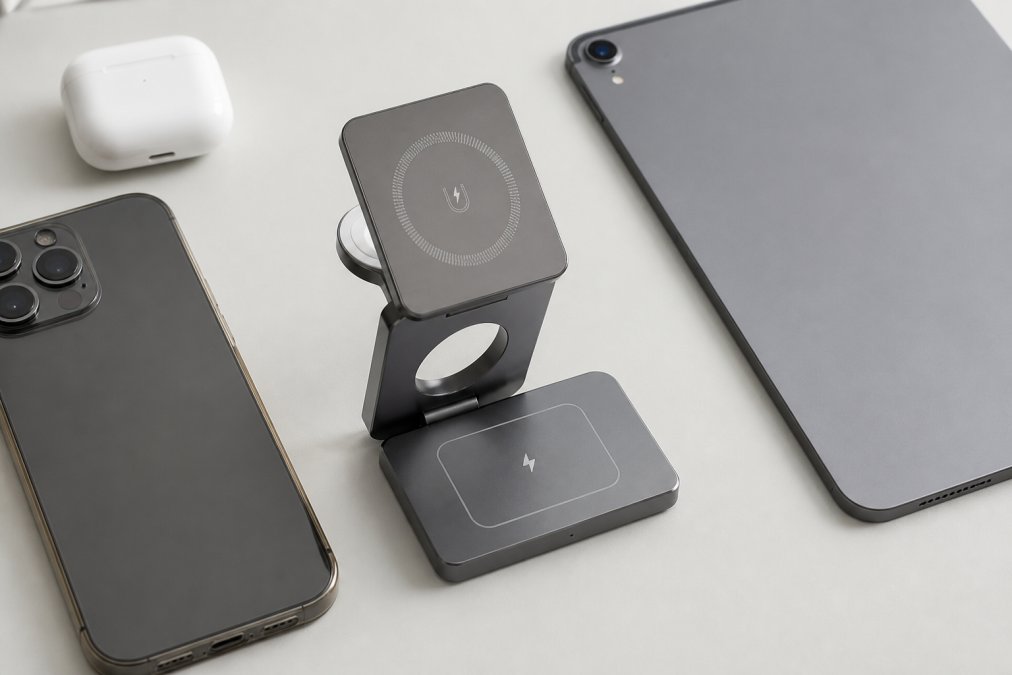
When you need a genuine multi-port solution, the 3-in-1 Magnetic Wireless Charging Station from Esther Tech Shop delivers the most practical design for travelers who use multiple devices daily. At $44.99, it combines wired charging for phones with wireless charging for earbuds and smartwatches, eliminating the need to juggle three separate chargers.

The 15W output handles simultaneous charging across all three devices without throttling. The magnetic alignment on the phone pad means you don't waste time repositioning, it snaps into place and starts charging immediately. The USB-C input uses the same cable as your laptop and phone, so you're not carrying proprietary connectors.
What separates this from cheaper alternatives is the 9V/2A stable power delivery. Many budget wireless chargers use inconsistent power delivery that charges slowly or stops mid-cycle. This unit maintains consistent output, which matters when you're charging in an airport terminal and need devices ready in 30 minutes.
The three-in-one design matters for travel specifically. Instead of three separate chargers taking up three USB ports and three cable slots in your bag, you have one unit. Esther Tech Shop ships within 24-48 hours, so you can order now and have it before your trip. Their customer service team is available Monday to Saturday, 9 a.m. to 8 p.m., if you have questions about compatibility with your specific devices.
The main limitation is that it's a desktop solution, not pocket-sized. If you need something that fits in a backpack for a weekend trip, this works perfectly. For ultra-minimalist packing, you'd want a smaller single-port charger instead.
How to Organize Charging Cables for Travel
Cable management determines whether your travel bag stays organized or becomes a tangled mess. The first step is ruthless elimination: bring only the cables you actually need. Most travelers overpack "just in case" cables they never use.
A cable organizer pouch is essential. Look for one with individual slots for each cable rather than one large compartment. This prevents tangling and lets you find the right cable immediately. Soft-sided pouches work better than hard cases, they compress into unused bag space instead of taking up fixed volume.
Label each cable at both ends with a small piece of tape or a cable label. When you're in a dark hotel room at 11 p.m., you don't want to guess which cable is USB-C and which is the old micro-USB. Labeling takes 2 minutes and prevents 10 minutes of frustration.
Velcro cable ties beat rubber bands. Rubber bands degrade from heat and UV exposure, then snap when you're halfway through your trip. Velcro ties last for years and adjust to different cable thicknesses. Bring 4-6 ties for a week-long trip.
Coil cables loosely rather than wrapping them tightly. Tight wrapping creates stress points that degrade the cable faster. A loose coil with a velcro tie keeps cables organized without damaging them. This extends cable lifespan significantly, you're not replacing frayed charging cables mid-trip.
Wireless Charging Stations: Reducing Cable Clutter
Wireless charging eliminates the single biggest source of desk clutter: cable management. Instead of four cables snaking across your workspace, you have one charging station that handles multiple devices simultaneously.
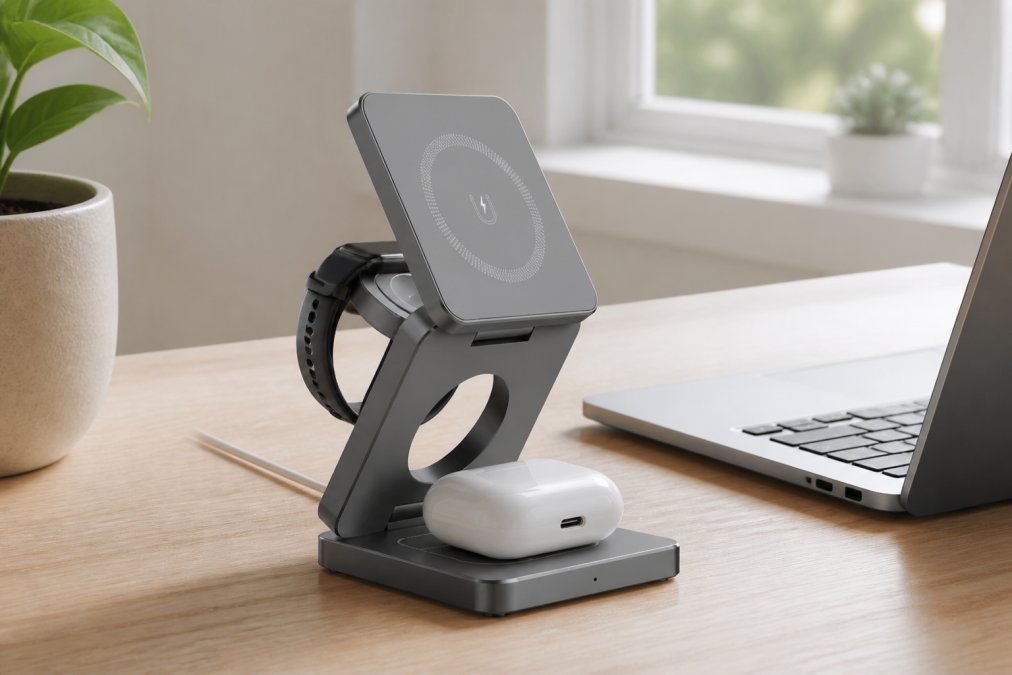
The Qi wireless charging standard has become universal. Most phones manufactured after 2018 support it, as do nearly all smartwatches and wireless earbuds. This means you can charge across device types without worrying about compatibility.
Multi-device wireless charging stations stack devices vertically or arrange them horizontally, depending on design. Vertical stacking saves desk space, the footprint is roughly the size of a coffee mug. Horizontal arrangements spread devices across a larger area but keep everything visible and accessible.
The trade-off is charging speed. Wireless charging tops out around 15W for phones, compared to 30-65W for wired fast charging. Your phone will fully charge overnight, but not in 30 minutes. For people who leave devices on the charger while working, this doesn't matter. For travelers who need quick top-ups, wired charging remains faster.
Heat dissipation in wireless chargers matters more than most people realize. A charger that generates excessive heat can throttle charging speed or degrade battery health. Quality wireless stations include thermal management circuits that prevent overheating. The Esther Tech Shop 3-in-1 station maintains safe operating temperatures even during extended charging sessions, which extends battery lifespan on all three devices.
Magnetic alignment makes wireless charging actually practical. Non-magnetic chargers require precise positioning, your phone can slip slightly and stop charging without you noticing. Magnetic charging pads snap devices into the exact charging position automatically. This is the difference between a wireless charger that works reliably and one that frustrates you daily.
Compact charging solutions for travel have evolved from a luxury to a necessity. The technology exists to charge everything you carry without doubling your bag weight or cable count. The key is matching the right charger type to your specific travel pattern: wall chargers for multi-device charging at a desk, portable power banks for all-day mobility, and wireless stations for overnight charging.
According to the TSA's official guidelines on power supplies, chargers and power adapters are permitted in both carry-on and checked luggage without restriction, making them ideal travel companions. When selecting your compact charging solutions for travel, prioritize weight-to-wattage efficiency and port compatibility over raw power output, you'll travel lighter and charge faster.
The USB Implementers Forum's Power Delivery specification ensures that modern chargers communicate safely with devices, preventing overcharging and thermal damage. This standardization means you can confidently buy chargers from different manufacturers knowing they'll work reliably across your entire device ecosystem.
At Esther Tech Shop, we've curated compact charging solutions specifically for travelers who refuse to compromise on speed or portability. The 3-in-1 Magnetic Wireless Charging Station combines three charging methods into one 15W station, eliminating cable clutter while maintaining fast charging speeds. With guaranteed 24-48 hour shipping and customer support available Monday to Saturday, 9 a.m. to 8 p.m., you can order with confidence. For travelers serious about optimized packing and efficient charging, Esther Tech Shop delivers the accessories that make the difference.
| Charger Type | Best For | Wattage Range | Weight | Portability |
|---|---|---|---|---|
| Wall charger (multi-port) | Desk or hotel charging | 65-100W | 4-6 oz | Desktop only |
| Wireless charging station | Multiple devices simultaneously | 15-30W | 5-8 oz | Desktop only |
| Single-port compact | Pocket-sized backup | 20-30W | 2-3 oz | Highly portable |
| Power bank with USB-C | All-day mobility | 10-20W output | 6-12 oz | Very portable |
Frequently Asked Questions
What should I look for in a travel charger?
Prioritize wattage output (at least 30W for laptops and tablets), port count for simultaneous charging, compact design under 200 grams, and universal voltage support for international use. Check for foldable prongs to reduce bulk and USB-C compatibility with your devices. Thermal management is critical in compact form factors, look for chargers with active cooling or heat dissipation design to prevent overheating during extended travel.
What is the difference between GaN and standard chargers?
GaN (gallium nitride) chargers are significantly smaller and lighter than traditional silicon chargers while delivering the same wattage output. They generate less heat, charge faster through improved power delivery protocols, and support multi-device charging more efficiently. For travelers, this means packing a 65W charger that weighs half as much as older models, making GaN charger benefits for travelers substantial for reducing luggage weight without sacrificing functionality.
Can I bring a travel charger on a plane?
Yes, travel chargers are TSA-compliant and allowed in both carry-on and checked baggage. However, power banks with lithium-ion batteries have strict restrictions, most airlines limit capacity to 100Wh (about 27,000 mAh). Wall chargers themselves have no watt-hour limits. Always check your airline's specific policy before traveling, as some carriers have additional rules. Foldable prongs and compact designs make chargers ideal for carry-on compliance.
How do I organize charging cables for travel?
Use cable organizers, pouches, or a dedicated tech bag to separate chargers from cables. Coil cables loosely to prevent damage and label them by device type. Consider a 3-in-1 wireless charging station like the one at Esther Tech Shop ($44.99) to eliminate multiple cables for phone, watch, and earbuds. Consolidating devices onto one multi-port wall charger reduces cable count significantly. Keep USB-C cables central since most modern devices use this standard.
This article was written using GrandRanker